
Introduction
Paragraph: In the landscape of copper-base bearing and bushing alloys, C932 — commonly designated SAE 660 bearing bronze — occupies a position of unmatched commercial significance. It is the most widely specified bronze alloy for sleeve bearings, bushings, and thrust washers in industrial machinery, and for good reason. Its carefully balanced composition delivers a combination of load-bearing capacity, embeddability, conformability, and machinability that few alloys can match across such a broad range of applications.
Chemical Composition of C932
C932 is classified as a high-leaded tin bronze, but its designation as part of the tin-aluminium-nickel alloy system reflects the nuanced role each compositional element plays. The nominal composition per ASTM B505 and B584 is:
Copper (Cu): 81.0–85.0% — the matrix providing thermal and electrical conductivity, corrosion resistance, and the foundational ductility of the alloy
Tin (Sn): 6.3–7.5% — dissolved in the copper matrix to provide solid-solution strengthening, improving hardness and wear resistance without sacrificing conformability
Lead (Pb): 6.0–8.0% — distributed as discrete particles throughout the microstructure, acting as a solid lubricant during boundary lubrication conditions and improving machinability
Zinc (Zn): 1.0–4.0% — a deoxidiser and flux during casting that also contributes to fluidity and soundness of cast components
Nickel (Ni): 1.0% maximum — present as a trace element that refines grain structure and modestly improves strength and hardness
Bearing Performance Mechanism
The Role of Lead in Bearing Performance
The lead phase in C932 is not merely a machinability aid — it is integral to the alloy’s bearing performance mechanism. Under conditions where the hydrodynamic oil film temporarily breaks down (boundary lubrication), lead particles at the bearing surface smear and transfer to the journal surface, providing temporary lubrication that prevents scoring or seizure.
This self-lubricating characteristic makes C932 tolerant of intermittent lubrication, overload conditions, and the momentary dry starts that are common in real-world machinery operation. No synthetic bearing material fully replicates this forgiving failure mode behavior.
Mechanical Properties
Strength, Hardness, and Load Capacity
In the as-cast condition, C932 delivers a tensile strength of approximately 240 MPa, yield strength around 124 MPa, and Brinell hardness of 60–65 HB. Elongation typically ranges from 15–20%, confirming the alloy’s ductility and conformability under loading.
These properties make it suitable for bearing pressures up to 14 MPa (2,000 psi) in continuous service, and considerably higher in intermittent or oscillating applications.
Machinability and Manufacturing
Machinability and Fabrication Characteristics
C932 is among the most machinable copper alloys available, with a machinability rating of approximately 70% relative to free-cutting brass (C360 = 100%). The lead phase acts as a chip-breaker and lubricant at the cutting interface, enabling high cutting speeds, excellent surface finish, and extended tool life.
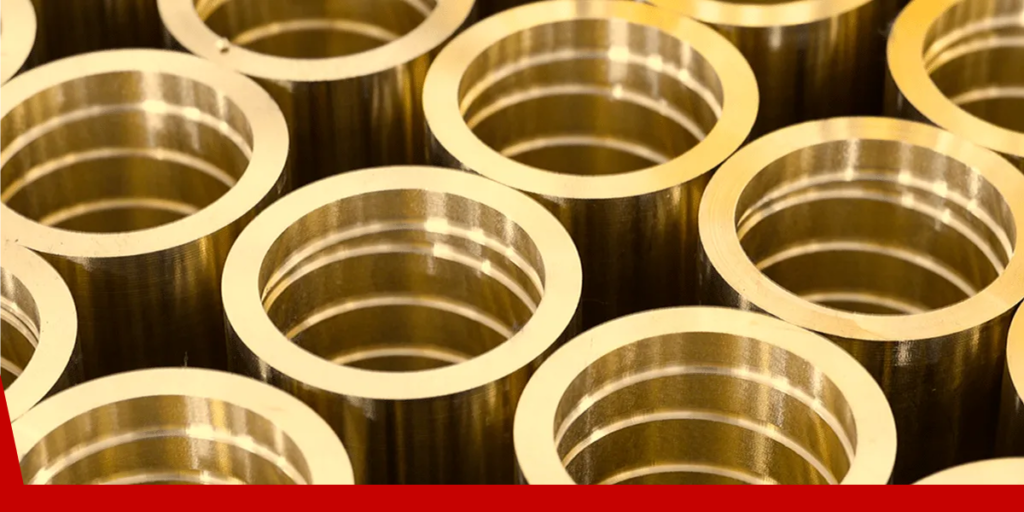
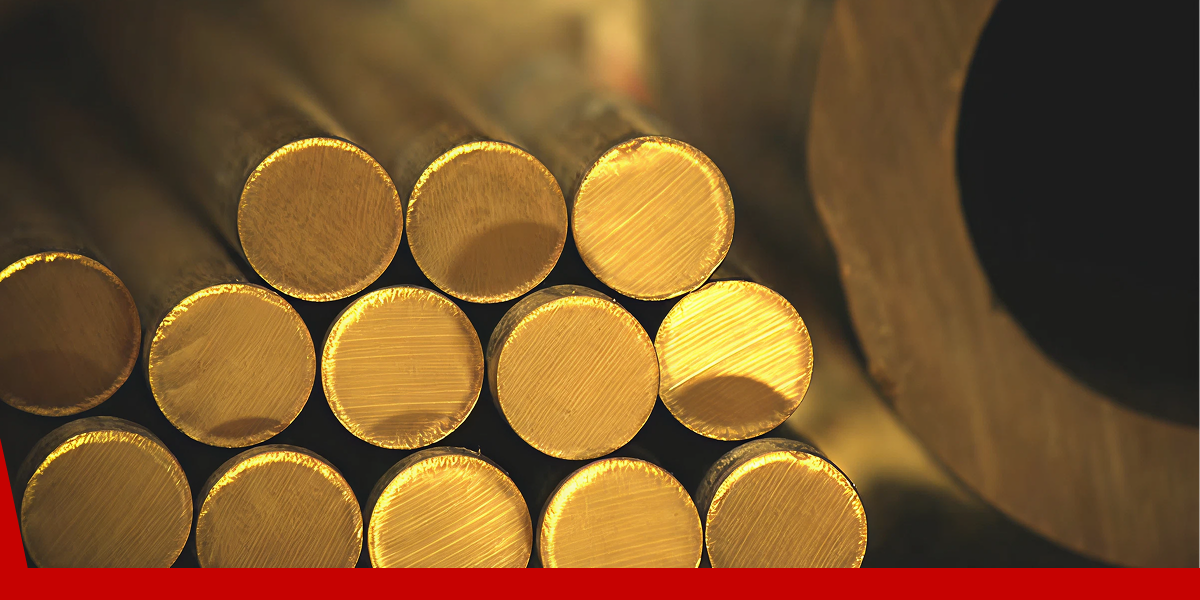
It is readily produced as centrifugal castings, continuous castings, and static castings, available in tube, bar, plate, and custom profiles.
[Insert Image Here]
Industrial Applications
Typical Applications
General-purpose sleeve bearings and journal bearings in electric motors, pumps, and gearboxes
Thrust washers in automotive and industrial transmissions
Bushings for construction equipment, agricultural machinery, and material handling systems
Valve bodies and hydraulic components requiring moderate pressure ratings
Wear plates and guide elements in press tooling and machine tools
Supplier Availability
Steelco Metals Supply Capability
Steelco Metals stocks C932 bronze in continuous cast tube, bar, and plate — ready to machine. Contact us for certified material and fast delivery.
FAQs
