
In this guide, we’ll break down what Monel 400 is, its chemical properties, comparisons with other Monel materials, industrial applications and the difference between Monel 400 and 625.
Monel 400 is a high-performance nickel-copper alloy known for its excellent resistance to corrosion and high strength. Used in a variety of demanding industrial applications, Monel 400 stands out for its ability to perform in harsh environments, such as marine and chemical processing. In this blog, we will explore the chemical properties of Monel 400, its material composition, and some of its key industrial uses, including how it compares to other Monel materials and Monel alloys.
What is Monel 400?
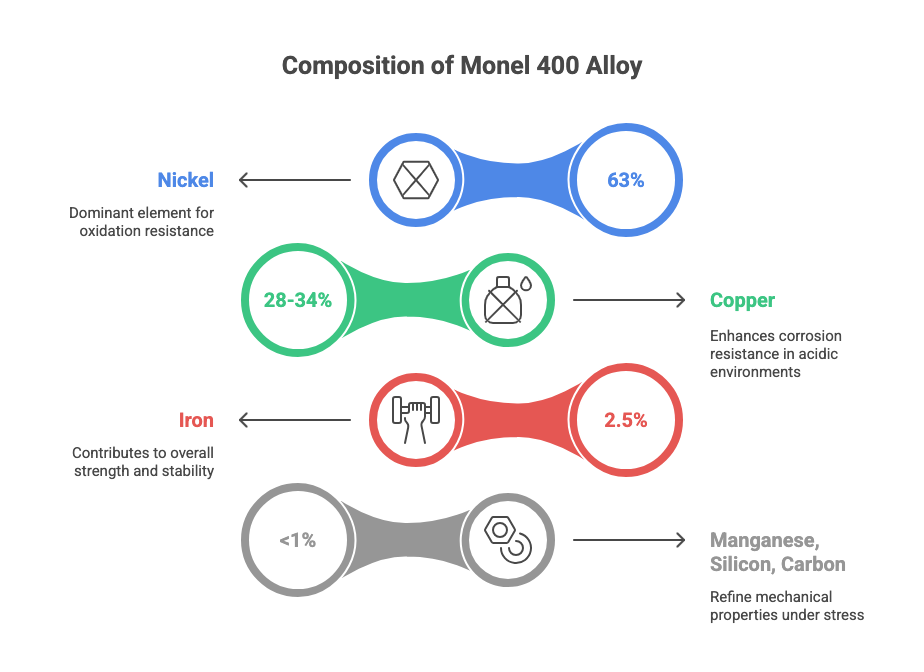
Monel 400 is an alloy made primarily of nickel and copper, with small amounts of other elements like iron, manganese, carbon, and silicon. With around 63% nickel and 28-34% copper, this alloy is known for its strength and resistance to corrosion, especially in acidic and alkaline environments. Monel metal is particularly well-suited for applications where resistance to seawater, steam, and other aggressive environments is required.
Monel 400 Chemical Properties
The chemical composition of Monel 400 gives it exceptional characteristics, making it an excellent choice for applications in high-stress, corrosive environments. Here’s a breakdown of its key chemical components and their effects on the material:
- Nickel (63%): Nickel is the dominant element in Monel 400, giving the alloy its resistance to oxidation and corrosion, and the ability to perform under extreme temperatures.
- Copper (28-34%): Copper enhances the alloy’s resistance to corrosion, particularly in seawater and other acidic environments. It also improves the material’s strength and durability.
- Iron (2.5%): Iron helps with the alloy's overall strength and stability, though too much can reduce corrosion resistance.
- Manganese, Silicon, and Carbon: These elements further refine the mechanical properties and help maintain the alloy’s form under stress.
Together, these elements give Monel 400 its remarkable ability to withstand corrosion, particularly in applications exposed to water, steam, and many acidic solutions.
Monel Alloy vs. Other Monel Materials
While Monel 400 is the most commonly used alloy in the Monel family, several other Monel alloys have been developed to meet specific industrial requirements. Here’s how Monel 400 compares to some other popular Monel materials:
- Monel 500: Similar to Monel 400, but with additional aluminium content, providing greater strength at high temperatures.
- Monel 200: A nickel alloy with less copper content than Monel 400, offering improved formability but slightly less corrosion resistance.
- Monel 625: Known for its higher resistance to oxidation and corrosion, Monel 625 is often used in more extreme environments, such as in the aerospace industry.
The main advantage of Monel 400 over these alloys is its balanced combination of strength and corrosion resistance, making it ideal for a broad range of industrial applications.
Applications of Monel 400 in Industry
Monel 400 is used across various industries where high strength, corrosion resistance, and durability are required. Some key uses include:
- Marine Industry: Monel pipes are often used in marine applications where corrosion resistance to seawater is critical. Monel 400’s resistance to seawater makes it ideal for shipbuilding, offshore oil drilling rigs, and piping systems in marine environments.
- Chemical Processing: The alloy’s resistance to acids and alkalis makes it perfect for use in the chemical processing industry. It is commonly used in heat exchangers, valves, and pumps.
- Aerospace: Monel alloys are used in high-performance parts in aircraft, including engine components and fuel systems, where high strength and resistance to stress corrosion cracking are essential.
- Electrical and Electronic Applications: Monel wire is used for electrical components that need both high conductivity and resistance to oxidation.
Monel 400: Durability and Performance
One of the most significant reasons Monel 400 is widely used in engineering applications is its outstanding mechanical properties. Its excellent tensile strength allows it to withstand high pressure and extreme temperatures, making it a reliable choice for applications that require materials that can endure over time.
In addition to its strength, Monel 400 is highly resistant to stress corrosion cracking, pitting, and general corrosion. It performs well in both high-temperature and low-temperature environments, making it versatile across industries.
Monel 400 vs. Monel 625
While Monel 400 is popular for its overall balance of strength and corrosion resistance, Monel 625 offers superior resistance to oxidation and is often used in more severe environments. However, Monel 400 remains the alloy of choice for applications in industries like marine, chemical processing, and aerospace, due to its strength, affordability, and ease of fabrication.
Conclusion
Monel 400 is a unique and versatile alloy, highly regarded for its strength, corrosion resistance, and durability across various industries. Its chemical composition, primarily made up of nickel and copper, enables it to withstand harsh conditions, making it ideal for marine, chemical, and aerospace applications. Whether you’re considering Monel pipes, Monel wire, or Monel alloys, understanding the properties and uses of Monel 400 will ensure that you select the right material for your project.